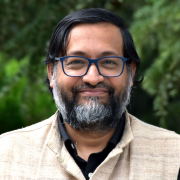
Dipankar Banerjee
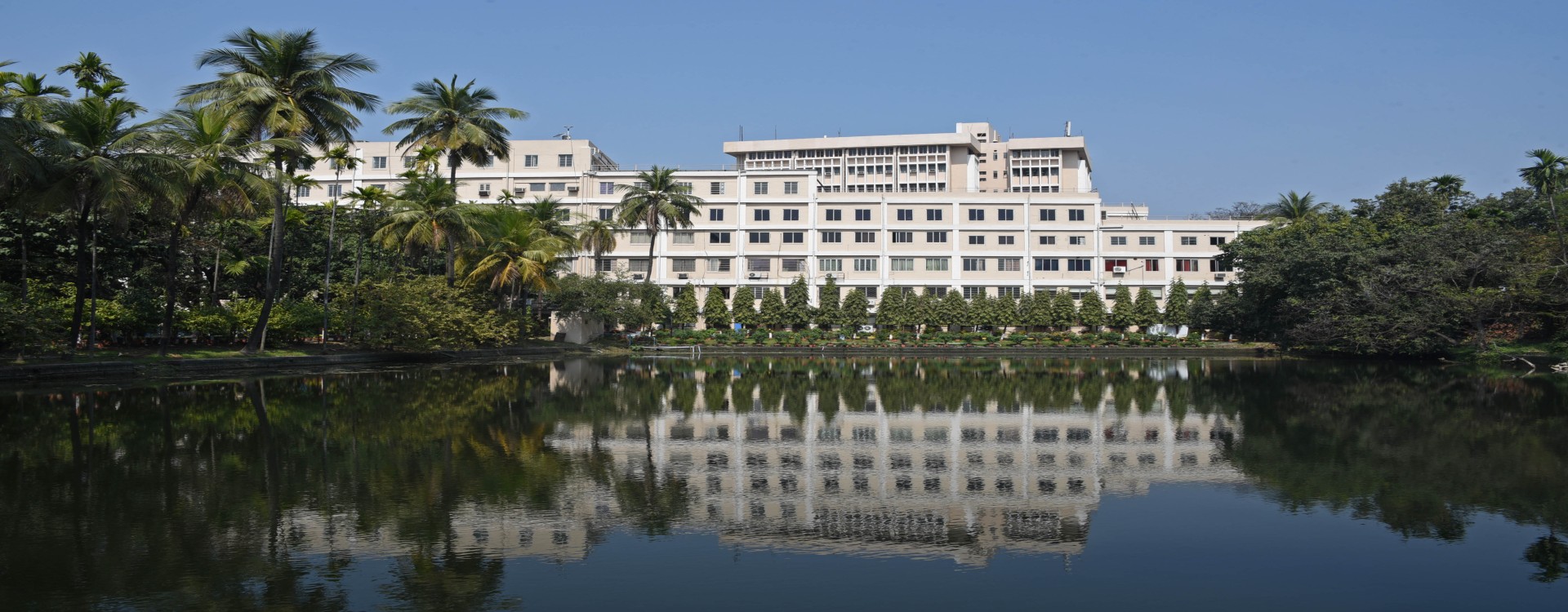
Aryabhatta Research Institute of Observational Sciences, India
Prof. Dipankar Banerjee is currently the director of the Aryabhatta Research Institute of Observational Sciences (ARIES), Nainital. He is an astrophysicist with a bachelor’s degree in physics (St. Xavier’s college) and master’s degree in Theoretical Physics from University of Kolkata. He has obtained his PhD from Indian Institute of Astrophysics and completed two postdoctoral tenures in reputed institutions in Europe. He is also a senior professor at the Indian Institute of Astrophysics. Dr Banerjee’s area of interest is the Sun and the solar atmosphere. His work involves theoretical and numerical modeling using data from ground and space-based instruments. His work has enriched our understanding of the Sun and its impact on Space Weather. He is the co-chair of the Science working group of the "Aditya" mission. He is fellow of the Indian Academy of Sciences and National Science Academy and currently the President of the Astronomical Society of India. Dr Banerjee has more than 140 peer-reviewed publications with around 3300 Citations in international journals. He is currently supervising 5 Phd students while 15 of his students have completed their PhDs. Apart from his scientific career, Dr Banerjee has interest in various other activities. He is trained in Hindustani vocal and part of a Bengali theatre group, Smarannik and regularly performs in plays, participating in national and international theatre festivals. Dr Banerjee’s love for science and zest for life are infectious.
Title of Talk: India’s first Solar Space observatory: Aditya L1 and scope of AI
Abstract:
Aditya L1 mission is the first observatory class solar mission from the Indian Space Research organization, launched in September 2023. With a combination of four remote sensing and 3 in situ instruments covering multi-wavelength it provides a unique opportunity to have joint observations with other co temporal missions. I will give a quick summary update of the status of the mission. In the context of AI and ML I will demonstrate how these techniques will enable us to analyze the data from these instruments and help us performing predictive science as well.