Trevor Hastie
Stanford University, USA
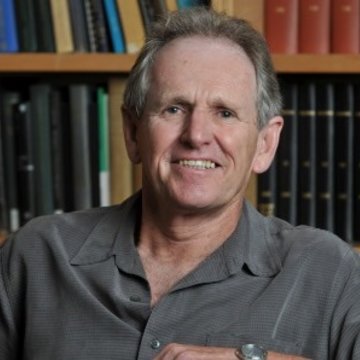
Trevor Hastie is the John A Overdeck Professor of Statistics at Stanford University. Hastie is known for his research in applied statistics, particularly in the fields of statistical modeling, bioinformatics and machine learning. He has published seven books and over 200 research articles in these areas. Prior to joining Stanford University in 1994, Hastie worked at AT&T Bell Laboratories for nine years, where he contributed to the development of the statistical modeling environment popular in the R computing system. He received a B.Sc. (hons) in statistics from Rhodes University in 1976, a M.Sc. from the University of Cape Town in 1979, and a Ph.D from Stanford in 1984. He is a dual citizen of the United States and South Africa.
Awards and Honors:
  • 2015 Recipient of 2015 Rhodes University Distinguished Alumni Award.
  • 2018 Elected to the United States National Academy of Sciences.
  • 2018 Honorary Doctorate, Leuphana University, Germany.
  • 2019 Recipient of Sigillum Magnum, University of Bologna, Italy.
  • 2019 Elected to the Royal Netherlands Academy of Arts and Science.
  • 2020 Senior Breiman Award, American Statistical Association.
  • 2023 Honorary Doctor of Mathematics, University of Waterloo, Canada.
Title of Talk: Statistical Learning with Sparsity
Abstract: In a statistical world faced with an explosion of data, regularization has become an important ingredient. Often data are "wide" - we have many more variables than observations - and the lasso penalty and its hybrids have become increasingly useful. This talk presents a general framework for fitting large scale regularization paths for a variety of problems. We describe the approach, and demonstrate it via examples using our R package GLMNET. We then outline a series of related problems using extensions of these ideas.
* Joint work with Jerome Friedman, Robert Tibshirani, and many students, past and present.
Bernhard Schölkopf
Max Planck Institute for Intelligent Systems, Germany
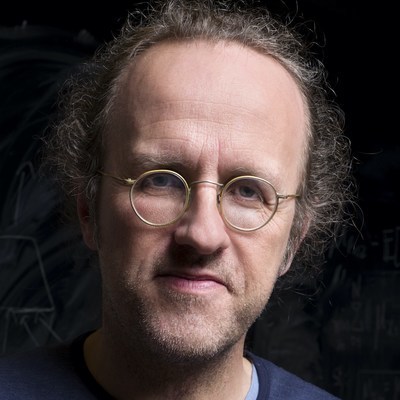
Bernhard Schölkopf's scientific interests are in machine learning and causal inference. He has applied his methods to a number of different fields, ranging from biomedical problems to computational photography and astronomy. Bernhard studied physics and mathematics and earned his Ph.D. in computer science in 1997, becoming a Max Planck director in 2001. He has (co-)received the Berlin-Brandenburg Academy Prize, the Royal Society Milner Award, the Leibniz Award, the BBVA Foundation Frontiers of Knowledge Award, and the ACM AAAI Allen Newell Award. He is Fellow of the ACM and of the CIFAR Program "Learning in Machines and Brains", a member of the German Academy of Sciences, and a Professor at ETH Zurich. He helped start the MLSS series of Machine Learning Summer Schools, the Cyber Valley Initiative, the ELLIS society, and the Journal of Machine Learning Research, an early development in open access and today the field's flagship journal.

Title of Talk: Symbolic, Statistical and Causal AI
Abstract: We describe basic ideas underlying research to build and understand artificially intelligent systems: from symbolic approaches via statistical learning to interventional models relying on concepts of causality. Some of the hard open problems of machine learning and AI are intrinsically related to causality, and progress may require advances in our understanding of how to model and infer causality from data.
Dacheng Tao
University of Sydney, Australia
Dacheng Tao is an Australian Laureate Fellow, a Professor of Computer Science, and Peter Nicol Russell Chair in the School of Computer Science, and an advisor and chief scientist of the digital sciences initiative and the founding director of the Sydney AI Centre in the Faculty of Engineering at The University of Sydney. His research is detailed in one monograph and over 200 publications in prestigious journals and proceedings at prominent conferences such as IEEE TPAMI, TIP, TNNLS, IJCV, JMLR, NeurIPS, ICML, ICLR, CVPR, ICCV, ECCV, AAAI, IJCAI, ICDM and KDD, with several best paper awards. He received the 2015 and 2020 Australian Eureka Prize, the 2018 IEEE ICDM Research Contributions Award, and the 2021 IEEE Computer Society McCluskey Technical Achievement Award. He is a Fellow of the Australian Academy of Science, the Royal Society of NSW, TWAS, AAAS, ACM and IEEE.

Title of Talk: More Is Different - Beyond Wittgenstein's Philosophy
Abstract: Unleashing the hidden wisdom within broad data has become a captivating pursuit for the community. Among the myriad of possibilities, one solution stands out: foundation models. These behemoth architectures, powered by transformers, possess the ability to extract and harness the enigmatic dark knowledge that resides within broad data. Parameters, computations, and data combine in a symphony of potential, demonstrating that in the world of transformers, "more is different", and reigniting our dreams for Artificial General Intelligence. In this presentation, we embark on a thrilling journey into the world of foundation models. We begin by introducing the ground-breaking LLMs ChatGPT and the wave of innovation they have set in motion. Along the way, we discuss concerns about the singularity of these techniques and offer our insights into this emerging trend. We then delve into theoretical foundations, example designs in NLP and CV, efficient decentralized optimization algorithms, and useful applications that flourish under the influence of foundation models. Yet, this adventure also highlights the challenges and opportunities that lie ahead in the era of these models. As we conclude, we do so with unwavering optimism: foundation models will play a pivotal role in shaping artificial intelligence. Join us on this remarkable expedition into the seamless integration of data, computational power and algorithms, where the future unveils itself in unprecedented ways.
Alison Noble
University of Oxford, UK
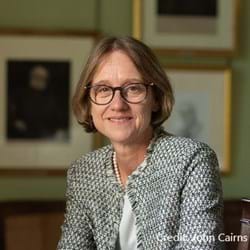
Professor Alison Noble FRS is currently the Technikos Professor in Biomedical Engineering at the University of Oxford, UK where she leads a medical image analysis group best known for learning-based ultrasound image analysis. Professor Noble received the UK Royal Society Gabor Medal for her inter-disciplinary research contributions in 2019, and the same year received the Medical Image Computing and Computer Assisted Interventions (MICCAI) Society Enduring Impact award. Professor Noble served on the MICCAI Society board for a decade and is a former President of the MICCAI Society (2013-5). She is currently a Vice President and Foreign Secretary of the Royal Society (UK National Academy of Science), and a Fellow of the UK Royal Academy of Engineering, the Royal Society, the MICCAI society and an ELLIS Fellow. In 2023, Professor Noble received a Turing AI World Leading Researcher Fellowship from UKRI. Additionally, she has held or currently holds grants from the ERC, UKRI, NIHR, Wellcome Trust, NIH, and the Bill and Melinda Gates Foundation. Professor Noble has a sustained track record of mentoring early career researchers at Oxford and on national schemes and has supervised 76 graduated PhD students (including 20 women) to date. Professor Noble received a CBE for services to engineering and biomedical imaging in the King’s Birthday Honours list in 2023.

Title of Talk: Progress in Learning to Simplify Ultrasound
Abstract: Automating the human skill of clinical ultrasound acquisition and interpretation is proving surprisingly difficult. Deep learning, which has been around for over a decade now, has provided a computational tool to advance understanding of both why scanning is hard, and to define assistive technologies to support humans to perform diagnostic ultrasound. I describe two quite different approaches we have been investigating on this topic. The first approach builds computational models of ultrasound tasks from simple-to-learn bespoke ultrasound scan sweep protocols making the models potentially suitable for triage in global health settings. The second is to take a multi-modal video analysis approach, whereby we use human gaze, probe movements and audio together with video to build learning-based models of ultrasound-based tasks. As I will show, deep learning underpins these solutions, but demonstrating success requires thinking beyond the algorithm.