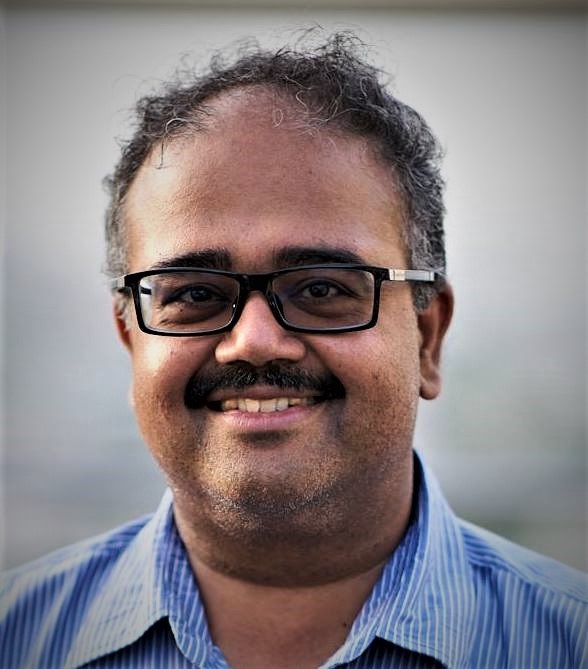
Balaraman Ravindran
Indian Institute of Technology Madras
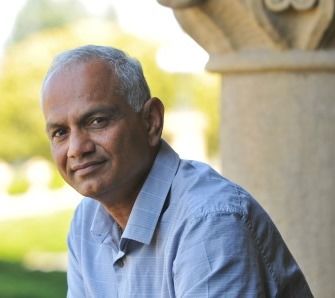
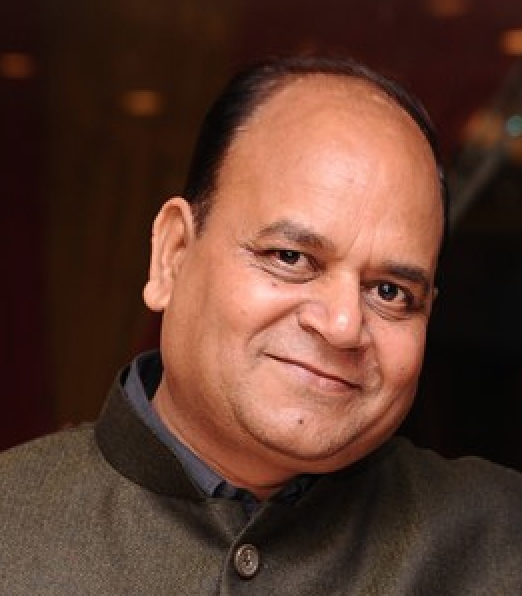
Professor B. Ravindran heads the Robert Bosch Centre for Data Science & AI and the Centre for Responsible AI (CeRAI) at IIT Madras. He is the Mindtree Faculty Fellow and Professor in the Department of Computer Science and Engineering at IIT Madras. He has held visiting positions at the Indian Institute of Science, Bangalore, India, the University of Technology, Sydney, Australia and Google Research. He has more than three decades of experience working in reinforcement learning, and his research interest spans learning on graphs and deep RL. He currently serves on the editorial boards of ACM Transactions on Intelligent Systems, Machine Learning Journal, Journal of AI Research, PLOS One, and Frontiers in Big Data and AI. He has published more than 100 papers in premier journals and conferences. His works with students have won multiple best paper awards, the most recent being the best application paper at PAKDD 2021. He is a member of the ACM Publications board’s AI task force. He co-chaired the committee that suggested regulations for the use of AI in financial markets in India and chaired the national task force on AI and cybersecurity. Ravindran led the curriculum design for several data science and AI degree programs offered by IIT Madras and currently directs the dual degree program on data science and the joint MSc in data science and AI with the University of Birmingham, UK. He chaired the committee that designed the curriculum for the GATE DS and AI paper - GATE is the equivalent of the GRE for admission to graduate programs in Engineering in India. He was elected ACM Distinguished Member (2021) for his significant contributions to computing. He was recognized, in 2020, as a Senior member of AAAI (Association for Advancement of AI) for his long-standing contributions to AI.

Title of Talk: Reinforcement Learning with Structured Actions and Policies
Abstract: Deep Reinforcement Learning has been very successful in solving a variety of hard problems. But many RL architectures treat the action as coming from an unordered set or from a bounded interval. It is often the case that the actions and policies have a non-trivial structure that can be exploited for more efficient learning. In this talk, I will present several scenarios in which taking advantage of the structure leads to more efficient learning. In particular, I will talk about some of our recent work on learning representations for actions that capture the underlying spatial structures and on learning ensemble policies.
SP Arun
Indian Institute of Science Bangalore
Professor SP Arun started out as an electrical engineer, read too much science fiction for his own good and turned into a neuroscientist. He is fascinated by how the brain transforms sensation into perception, particularly for vision. His lab at the Centre for Neuroscience, Indian Institute of Science, studies how the brain solves vision by investigating perception and brain activity in humans, by investigating behavior and neural activity in monkeys and by comparing vision in brains and machine algorithms. For more details visit the homepage of his research group, the Vision Lab @ IISc.

Title of Talk: Improving Machine Vision using Insights from Neuroscience
Abstract: Deep neural networks have revolutionized computer vision with their impressive performance on vision tasks. Recently their object representations have been found to match well to the visual areas of the brain. Yet their performance is still worse than humans, and it has been challenging to derive insight into why deep networks work or how they can be improved. In our lab we have been comparing object representations in brains and deep networks with the aim of understanding how we see and to make machine see better. We have shown that systematic biases in deep networks can be identified by comparing with brain representations, and that fixing these biases can improve performance. We have also been testing deep networks for the presence or absence of a variety of classic perceptual phenomena. Taken together these results suggest that accumulated wisdom from vision neuroscience can help us understand and improve deep neural networks. For more information visit our research group, the Vision Lab at IISc at https://sites.google.com/site/visionlabiisc/
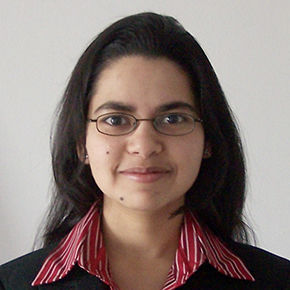
Richa Singh
Indian Institute of Technology Jodhpur
Professor Richa received her Ph.D. degree in computer science from West Virginia University, Morgantown, USA, in 2008. She is currently a Professor and Head at Department of Computer Science and Engineering, IIT-Jodhpur, and an Adjunct Professor with IIIT-Delhi and West Virginia University, USA. She has co-edited the book-Deep Learning in Biometrics and has also delivered keynote talks/tutorials on deep learning, trusted AI, and domain adaptation in BIOSIG2021, GTC 2021, ICCV 2017, AFGR 2017, and IJCNN 2017. Her areas of interest are pattern recognition, machine learning, and biometrics. She is also a Fellow of IEEE and IAPR and a Senior Member of ACM. She was a recipient of the Kusum and Mohandas Pai Faculty Research Fellowship at the IIIT-Delhi, the FAST Award by the Department of Science and Technology, India, and several best paper and best poster awards in international conferences. She has also served as the Program Co-Chair of IJCB2020, AFGR2019 and BTAS 2016, and a General Co-Chair of ISBA 2017. Currently, she is serving as a Program Chair of CVPR2022 and ICMI2022 and General Chair of FG2021. She is also the Vice President (Publications) of the IEEE Biometrics Council and an Associate Editor-in-Chief of Pattern Recognition, and Area/Associate Editor of several journals.

Title of Talk: Adventures and Impact of AI in Face Recognition and Deepfakes
Abstract: The increasing capabilities of machine learning algorithms is enabling the research community to address a number of long standing computer vision problems. However, as the saying goes that beauty lies in the eyes of the beholder, a technology can be utilized for both positive and negative tasks. For instance, while face recognition can provide solutions to problems like missing children and injured face identification, it can also be misused for similar tasks. We will discuss research initiatives in face recognition and deepfake that we have been pursuing along with the technological contributions and the social impact in the community.
Balasubramanian Narasimhan
Stanford University, USA
Balasubramanian Narasimhan is a Senior Research Scientist in the Department of Biomedical Data Science and in Department of Statistics at Stanford University. He is also the Director of the Data Coordinating Center in the School of Medicine at Stanford. He obtained his B.Sc. in Maths at Loyola College, Chennai, M.Sc. in Applied Mathematics at PSG College of Technology, Coimbatore, and his Ph.D. in Statistics at Florida State University, USA. He is an elected member of the R Foundation. His research interests are in optimization, machine learning, statistical computing, and biostatistics.

Title of Talk: Convex Optimization: Tools and Applications in Statistics and Data Science
Abstract: Optimization plays an important role in Statistics and Data Science and many algorithms rely on estimators that result from solving convex optimization problem. I will introduce "Disciplined Convex Optimization" (DCP), a constructive approach to formulating such problems. DCP provides mathematical building blocks with known properties along with a set of rules to combine them. Although these rules are sufficient (but not necessary) conditions for convexity, the approach captures a sizeable class of problems researchers encounter. Specifically, I will describe our work on CVXR, which implements DCP in the R programming language. To solve a convex problem, one specifies an objective and constraints by combining constants, variables, parameters, and a library of functions in a manner that closely mirrors the actual mathematical description. CVXR then applies DCP rules to verify the problem's convexity. Once verified, the problem is converted into standard conic form using graph implementations and passed to a numerical solver. If time permits, I will demonstrate with some examples.
Gajendra P. S. Raghava
Indraprastha Institute of Information Technology, New Delhi
Raghava is a professor in Department of Computational Biology at IIIT, Delhi. He received his M.Tech degree from IIT Delhi in 1986 and the PhD degree from IMTECH, Chandigarh, in 1996. He has worked as a Postdoctoral fellow at Oxford university, UK (1996-98), Bioinformatics specialist at UAMS, USA (2003 & 2006) and visiting professor at POSTECH, South Korea (2004). He has worked for almost 30 years (1986 to 2017) at different scientific positions in the field of bioinformatics at the CSIR-Institute of Microbial Technology, Chandigarh. His group has published more than 350 research papers in different reputed journals and have developed more than 300 insilico products (web servers, databases and software packages), which is the highest contribution by a single group in the world. He is a strong supporter of open source software/web-servers and all the services developed at his group are free for academic use. These web-based services are heavily used worldwide and have more than 150,000 hits per day. He is a highly cited researcher and his papers have got more than 20000 citations with h-index 74. He was awarded the National Bioscience Award in 2006 by the DBT, the Shanti Swarup Bhatnagar Award in 2008 by CSIR and the J. C. Bose National Fellowship (2010-2020) by the DST. He is also a fellow of NASI, IASc, and INSA.

Title of Talk: Computer-Aided Healthcare in Era of Artificial Intelligence
Abstract: The field of health informatics encompasses a wide range of disciplines aimed at acquiring, processing, and interpreting data to improve human health and healthcare services. Within the healthcare domain, informatics encompasses several specialized fields, including cheminformatics, pharmacoinformatic, health informatics, and medical/clinical informatics, which collectively generate an extensive amount of biological and clinical data. Bioinformatics, in particular, plays a pivotal role in compiling, storing, annotating, and analysing this data, making it accessible to both biologists and non-biologists alike. In light of the escalating global healthcare burden caused by emerging infectious diseases, the need for efficient drug discovery and development has become paramount. Informatics advancements, such as cheminformatics and pharmacoinformatic, have significantly reduced costs and time associated with drug discovery by enabling the identification of drug targets, selection of lead compounds, and prediction of crucial drug properties. Moreover, the field of immunoinformatic has emerged as a crucial player in vaccine development, employing computational tools to expedite the discovery of potential vaccine candidates. Medical/clinical informatics deals primarily with patient data, clinical knowledge, and information related to patient care, playing a pivotal role in disease diagnosis through the identification of biomarkers and assisting healthcare professionals in providing personalized treatments. The advent of the Internet of Things (IoT) has further revolutionized healthcare by facilitating the development of mobile apps, telemedicine platforms, and wearable sensor-based devices that enable remote monitoring and real-time health data collection. This talk aims to provide a comprehensive overview of freely available computational tools and databases in key areas of healthcare, such as drug discovery, toxicity and adverse effects assessment, vaccine development, disease diagnosis, and IoT applications. The featured resources encompass databases, web servers, standalone applications, and mobile apps, offering a diverse range of support to researchers across various healthcare disciplines. By highlighting these valuable resources, researchers can leverage their functionalities to expedite their work and contribute to the advancement of human health and healthcare services (https://webs.iiitd.edu.in/ )