


CULTURE OF MONGOLIA
*** Mongolian Ger ***
 A
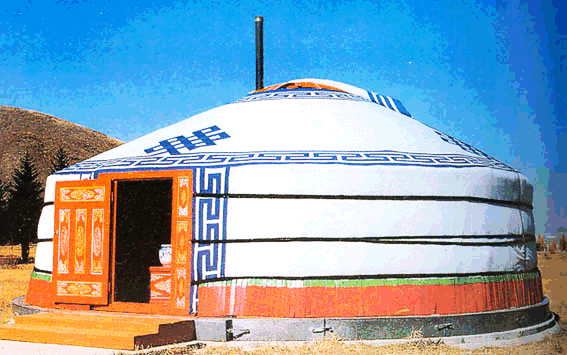
ger or “house, home” is referred as the White Pearl of the Steppe. It is not
only practical in daily use but holds many meanings for Mongolians. The
materials of the ger are lightweight that makes it easy for herders to
transport the gers either on the back of a camel or on a horse-pulled cart.
The gers are decorated with beautiful carved doors and pillars as well as
handmade (woven and knitten) fabrics. The two pillars that hold the toono
(roof in a shape of a round opening) symbolize the man and the woman of the
household, and walking between them is not approved of. A herder can easily
tell you what time of the day it is according to how the light comes through
roof. Due to winds mostly from North and Northwest, the doors of the gers
always face South, useful to know when one is travelling in the countryside.
Another useful tip for a traveler is not to step on the threshold as you
enter the ger, for you would be seen as stepping on the neck of the head of
the household!
A
ger or “house, home” is referred as the White Pearl of the Steppe. It is not
only practical in daily use but holds many meanings for Mongolians. The
materials of the ger are lightweight that makes it easy for herders to
transport the gers either on the back of a camel or on a horse-pulled cart.
The gers are decorated with beautiful carved doors and pillars as well as
handmade (woven and knitten) fabrics. The two pillars that hold the toono
(roof in a shape of a round opening) symbolize the man and the woman of the
household, and walking between them is not approved of. A herder can easily
tell you what time of the day it is according to how the light comes through
roof. Due to winds mostly from North and Northwest, the doors of the gers
always face South, useful to know when one is travelling in the countryside.
Another useful tip for a traveler is not to step on the threshold as you
enter the ger, for you would be seen as stepping on the neck of the head of
the household!
*** Traditional costume – Deel ***
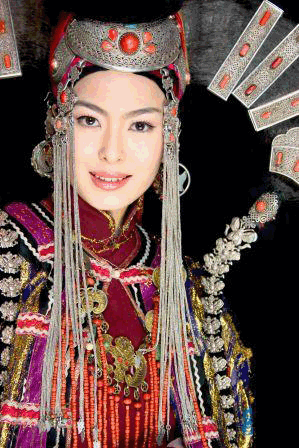 The
deel, the colourful dress is worn by men and women. It is an elegant
three-quarter-length gown that buttons at the right shoulder to a high
round-necked collar. Winter deel is made of cotton and lined with
sheepskins, whilst summer deel is made of silk with traditional patterns and
designs, in shining bright colors. The sleeves are long that they cover the
hands. Although usual coat of European style is common, every mongolian has
a best deel for special occasion such as Naadam and Tsagaan sar (Lunar new
year).
The
deel, the colourful dress is worn by men and women. It is an elegant
three-quarter-length gown that buttons at the right shoulder to a high
round-necked collar. Winter deel is made of cotton and lined with
sheepskins, whilst summer deel is made of silk with traditional patterns and
designs, in shining bright colors. The sleeves are long that they cover the
hands. Although usual coat of European style is common, every mongolian has
a best deel for special occasion such as Naadam and Tsagaan sar (Lunar new
year).
A deel has multipurpose uses, acting as a warm blanket at night , as a mini
tent when getting dressed or undressed, and a private canopy when there is
no cover.
*** Snuff bottle ***
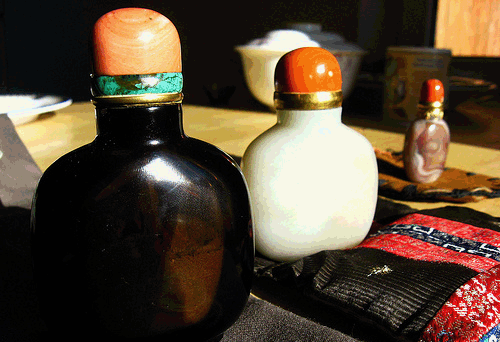 When
men greet one another, snuff bottles are passed around in the upturned palm
of the right hand.The recipient takes a pinch of snuff with a tiny
spoon-like scoop which is attached to the lid, and places it on the back of
his hand before inhaling it, or he may hold the bottle to his nose and pass
it on. Snuff bottles are carved from semi-precious stones and are considered
one of the most valued possessions of a Mongolian man. These valuables are
carried in carefully embroidered pouches and indicate the wealth and status
of their owners.
When
men greet one another, snuff bottles are passed around in the upturned palm
of the right hand.The recipient takes a pinch of snuff with a tiny
spoon-like scoop which is attached to the lid, and places it on the back of
his hand before inhaling it, or he may hold the bottle to his nose and pass
it on. Snuff bottles are carved from semi-precious stones and are considered
one of the most valued possessions of a Mongolian man. These valuables are
carried in carefully embroidered pouches and indicate the wealth and status
of their owners.
Festivities
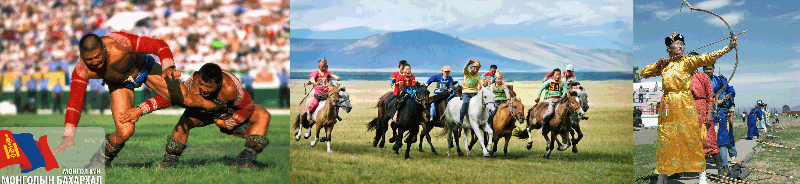
The most
important public festivals are the Naadams (Mongolian: games). The biggest
one is held each year on July 11-13 in Ulaanbaatar, but there are also
smaller ones on aimag and sum levels. A naadam involves horse races,
wrestling, and archery competitions.
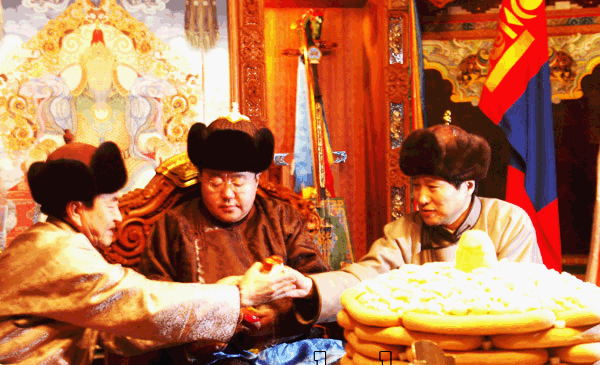
For families, the most important festival is Tsagaan Sar (Mongolian: white
month or white moon), which is roughly equivalent to New Year and usually
falls into January or February.
Family members and friends visit each other, exchange presents - very
popular presents for all opportunities are khadags - and eat huge quantities
of buuz.
***
Traditional Mongolian Music ***
 Morin
Khuur, a two-stringed fiddle figures prominently in the nomadic culture of
Mongolia. String instruments adorned with horse heads are referred to by
written sources dating back from the Mongol empire of the thirteenth and
fourteenth centuries. The fiddle’s significance extends beyond its function
as a musical instrument, for it was traditionally an integral part of the
rituals and everyday activities of the Mongolian nomads.The instrument’s
hollow trapezoid-shaped body is attached to a long fretless neck bearing a
carved horse head at its extremity. Just below the head, two tuning pegs jut
out like ears from either side of the neck. The soundboard is covered with
animal skin, and the strings and bow are made of horsehair.
Morin
Khuur, a two-stringed fiddle figures prominently in the nomadic culture of
Mongolia. String instruments adorned with horse heads are referred to by
written sources dating back from the Mongol empire of the thirteenth and
fourteenth centuries. The fiddle’s significance extends beyond its function
as a musical instrument, for it was traditionally an integral part of the
rituals and everyday activities of the Mongolian nomads.The instrument’s
hollow trapezoid-shaped body is attached to a long fretless neck bearing a
carved horse head at its extremity. Just below the head, two tuning pegs jut
out like ears from either side of the neck. The soundboard is covered with
animal skin, and the strings and bow are made of horsehair.
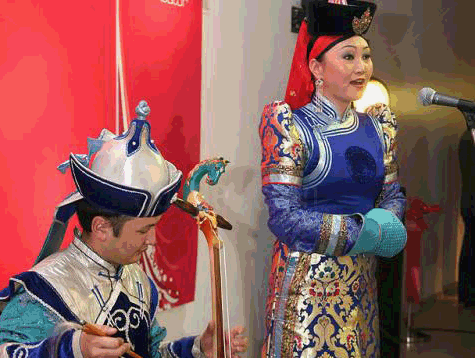 The
Urtiin duu or “long song” is one of the two major forms of Mongolian
singing. The other one is called Bogino duu or “short song”. Urtiin duu as a
ritual form of expression associated with important celebrations and
festivities holds a special place in the Mongolian society. It is performed
at weddings, house warming, celebration of a child’s birth, branding of
foals and other social events woven into the life of a herder. Urtiin duu
can also be heard at the Naadam, annual celebration of the independence of
Mongolia where the “Three manly sports” featuring wrestling, archery and
horseracing take place.
The
Urtiin duu or “long song” is one of the two major forms of Mongolian
singing. The other one is called Bogino duu or “short song”. Urtiin duu as a
ritual form of expression associated with important celebrations and
festivities holds a special place in the Mongolian society. It is performed
at weddings, house warming, celebration of a child’s birth, branding of
foals and other social events woven into the life of a herder. Urtiin duu
can also be heard at the Naadam, annual celebration of the independence of
Mongolia where the “Three manly sports” featuring wrestling, archery and
horseracing take place.
*** Traditional Mongol painting ***
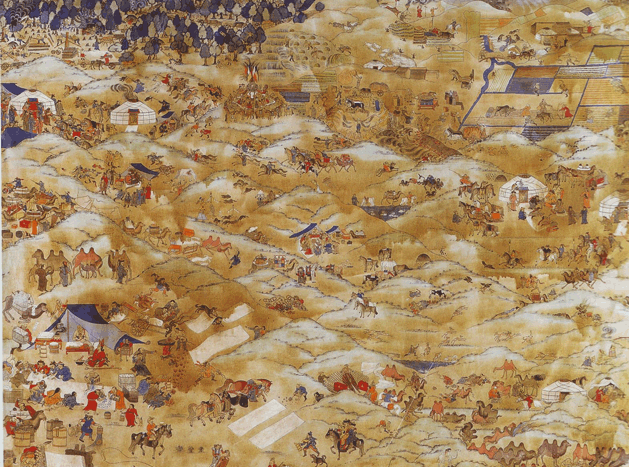 The
country’s most striking art form is the unique traditional Mongol zurag
painting, a type of story-telling art without words that may be described as
a developed form of nave painting. Mongol zurag portrays everyday country
life with images of people, horses and gers, combined with folk motifs and
legends.
The
country’s most striking art form is the unique traditional Mongol zurag
painting, a type of story-telling art without words that may be described as
a developed form of nave painting. Mongol zurag portrays everyday country
life with images of people, horses and gers, combined with folk motifs and
legends.
Fine line drawings were colored with natural mineral pigments, such as red
ochre and charcoal, until lacquer paints became available in Mongolia. The
best known master of Mongol, zurag Marzan (Joker) Sharav , painted in the
early 20s century. His ethnographic works on monumental backgrounds gave an
insight into Mongolian nomadic culture. Sharav’s “Day in the life of
Mongolia ” or “One day of Mongolia” depicts dozens of small scenes with men
herding livestock, hunting, making felt, putting up a ger and slaughtering
animals, while women and girls milk animals and prepare food. In the
different scenes, people are living and dying, engaged in archery and
wrestling, attending ceremonies, fighting and making love.
*** Cinema ***
In socialist times, movies were treated as a propaganda instrument by the
Mongolian People's Revolutionary Party. The first topics were popular
legends and revolutionary heroes like in Sükhbaatar. In the 1950s, the focus
shifted to working class heroes, as in New Year. The 1970s saw many
documentaries and everyday life stories as in The Clear Tamir.
After democratisation, filmmakers turned to international partners for
support, as in the Japanese-Mongolian co-production Genghis Khan.
Independent directors like Dorjkhandyn Turmunkh, and Byambasuren Davaa
created movies that connected ancient traditions and mythology, and how they
may relate to life in a modern world. Byambasuren's The Story of the Weeping
Camel was nominated for an Academy Award as foreign documentary in 2005.
*** Games ***
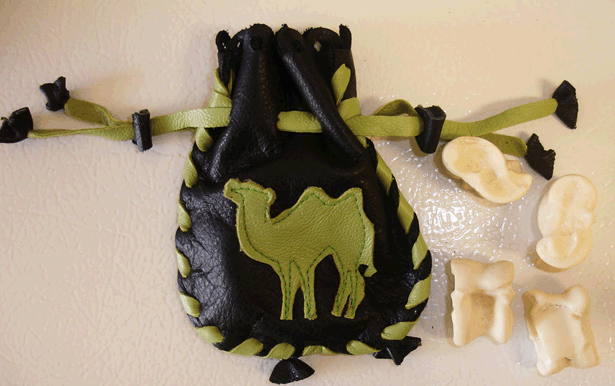 Sheep
anklebones, or Shagai, are used in a number of different games, as dice, or
as token. "Rock, Paper, Scissors"- and Morra-like games are also played.
Wood knots and disentanglement puzzles have traditionally been popular.
Popular board games are chess, and checkers. The rules used today are the
same as in European chess. Dominoes are also quite widespread. Indigenous
card games existed in the 19th century, but are now lost.
Sheep
anklebones, or Shagai, are used in a number of different games, as dice, or
as token. "Rock, Paper, Scissors"- and Morra-like games are also played.
Wood knots and disentanglement puzzles have traditionally been popular.
Popular board games are chess, and checkers. The rules used today are the
same as in European chess. Dominoes are also quite widespread. Indigenous
card games existed in the 19th century, but are now lost.