HISTORY
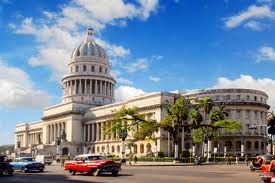
Cuba has a 100% literacy rate,[12][13] an infant death rate lower than some developed countries,[14] and an average age expectancy of 77.64.[15] Cuba is the only nation in the world which meets the WWF's definition of sustainable development; having a ecological footprint of less than 1.8 hectares per capita and a Human Development Index over 0.8.[16]
Cuba was inhabited by Native American people. The ancestors of these Native Americans migrated from the mainland of North, Central and South America several centuries earlier.[21] The native Tainos called the island Caobana.[22]
Spanish colonization
Diego Velázquez de Cuéllar, conquistador of Cuba
On October 12, 1492, Christopher Columbus landed near what is now Baracoa. He claimed the island for the new Kingdom of Spain[23] and named Isla Juana. The Spanish enslaved the approximately 100,000 indigenous people who resisted conversion to Christianity, setting them primarily to the task of searching for gold. Within a century the indigenous people were virtually wiped out due to multiple factors, including Eurasian infectious diseases aggravated in large part by a lack of natural resistance as well as privation stemming from repressive colonial subjugation.[25][26]
Cuba remained a Spanish possession for almost 400 years (1511–1898), with an economy based on plantation agriculture, mining, and the export of sugar, coffee, and tobacco to Europe and later to North America. The work was done primarily by African slaves brought to the island.
The small land-owning elite of Spanish settlers held social and economic powers supported by a population of Spaniards born on the island (Criollos), other Europeans, and African-descended slaves.
Cuba has survived more than 40 years of US sanctions intended to topple the government of Fidel Castro. It also defied predictions that it would not survive the collapse of its one-time supporter, the Soviet Union.
Since the fall of the US-backed dictatorship of Fulgencio Batista in 1959 Cuba has been a one-party state led by Mr Castro and - since February 2008 - by his anointed successor, younger brother Raul.
The US leases the Guantanamo Naval Base on the eastern tip of the island under a 1903 treaty, and continues to send Cuba payment for it. Cuba under the Castros disputes the lease, saying that it was concluded under duress, and has refused to cash any of the cheques since the early days of the revolution.
In 1492, Christopher Columbus found and claimed the island now occupied by Cuba, for the Kingdom of Spain. Cuba remained territory of Spain until the Spanish American War ended in 1898, and gained formal independence from the U.S. in 1902. Between 1953-1959 the Cuban Revolution occurred, removing the dictatorship[11] of Fulgencio Batista, and installing a government led by Fidel Castro.
Cuba is home to over 11 million people and is the most populous island nation in the Caribbean. Its people, culture, and customs draw from diverse sources, such as the aboriginal Taíno and Ciboney peoples, the period of Spanish colonialism, the introduction of African slaves and its proximity to the United States.