|
|
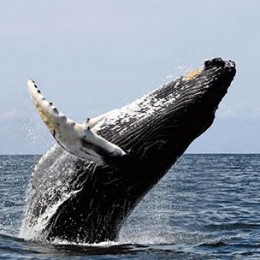
Above the waterline whales breach
the surface, offering tantalizing glimpses or longer,
lingering views. To stare into the eye of one of these
mysterious, huge animals is to look back to the beginning of
time. Blue
whales, the largest animal on the planet, are seen
off south coast Mirissa from
November to May, as are Humpback and Sperm
whales, while on the north-west coast, off Kalpitiya
peninsula, dolphins by
the score cut through the brilliant blue sea, leaping,
spinning, frolicking . . .
|
|
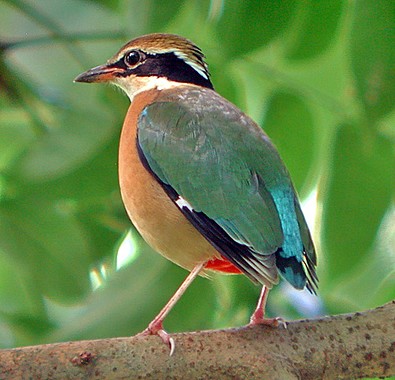
Sri Lanka's birdlife is astonishing:
ornithologists and birdwatchers flock here to
take in such dazzling encounters as a flamboyant peacock strutting
like a courtier, trying to impress the hens with
his shimmering tail feathers, and a White-bellied
Sea
Eagle swooping
from his perch on a half-submerged tree, diving low
over an inland tank to pluck a fish from the water.
And not forgetting a Sri
Lankan Paradise Flycatcher flitting
from perch to perch its amazingly long tail feathers
bobbing behind it like a chestnut ribbon. |
Hornbills are
seen nesting in hollowed tree trunks, completely sealed in
except for a small hole sufficient only for their partners
to insert food, while noisy flocks of parakeets speckle
the blue sky green. In Sinharaja
Forest Reserve and
other wet zone forests, mixed
feeding flocks feature
prominently, with many species travelling together through
the forest plucking insects from the air, pulling grubs from
tree-trunks and sipping nectar from flowers.
Even when confined to the city, birdwatching is an option. Sunbirds dart
low through garden groves while stocky-beaked Barbets flash
pale green in the higher branches. Koels and Coucals seem
to compete with one another for top volume, their raucous
morning calls rousing many from slumber. Crows,
so common as to be often overlooked, are always worth
watching as they bicker and badger one another over food
scraps and nesting materials.
Even more evocative is the blood-curdling shriek of the Spot-bellied
Forest Eagle Owl, locally known as the ulamaor
.devil-bird.. This is the largest and rarest of Sri Lanka.s
dozen owl species and part of a rich avifaunal community of
482 species that are either residents or visitors to the
island, including 26 endemic species.
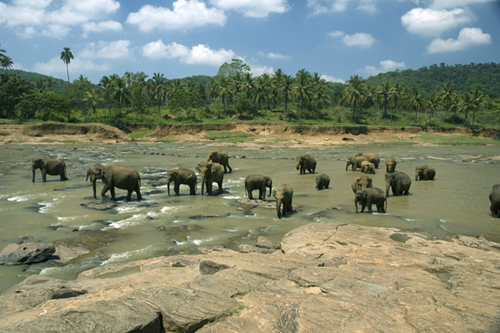
In September, towards the end of the dry season,
most water sources have disappeared. TheMinneriya
tank, however, retains water throughout the
parched months, so there are elephant gatherings
here every year at this time, the number of these
gentle, charismatic giants sometimes exceeding 300.
To see so many together - playing, eating, swimming,
looking for mates - is nothing but breathtaking.
Elephants may be the most celebrated of Sri Lanka.s
diverse wildlife, but they represent just one actor
on a crowded ecological stage. For instance, this is
one of the best places in the world to see the
elusive leopard,
and one of the only places where this big cat is top
predator . the king of the Sri Lankan jungle. With
striking markings, a sleek, powerful body, and
graceful movements, the leopard is thrilling to
observe . try Yala
National Park in
the south-east coastal arid zone.
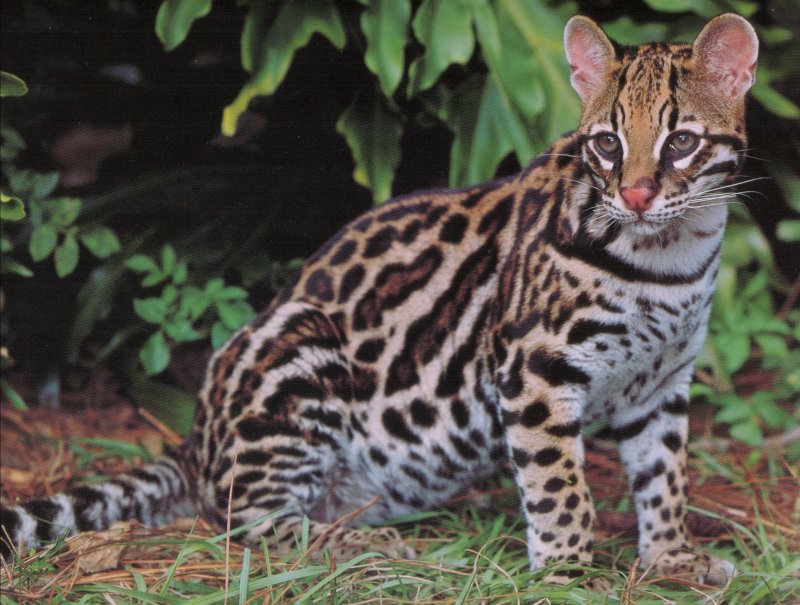
Small Cats
Civets, mongooses, porcupines and pangolins, and
three species of small
cats roam
the forest floor, while up in the trees primates reign.
The widely-spread toque
macaque is
an archetypal monkey - active, acrobatic and
not a little mischievous. In Polonnaruwa they
live among the ruins of ancient temples and
palaces. Grey
langurs, members of the tribe of
the monkey-god Hanuman of the Hindu epic
poem, the Ramayana,
inhabit the dry lowlands and are often seen
in large troops, their long tails held
partially erect in unintentional mimicry of
a question-mark.
Insects
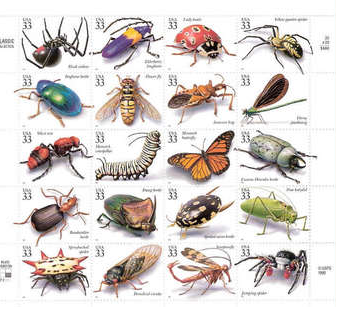
On a smaller scale, the
island abounds with a wonderful
diversity of creatures. Butterfliesdip
and flutter on delicate wings.
Gaudy dragonflies hover
on rigid, translucent wings
while ethereal damselflies dance
amid the foliage. Spiders,
like tiny gemstones, wait
patiently in gauzy webs that
shimmer in the early morning
sunshine.
|
|
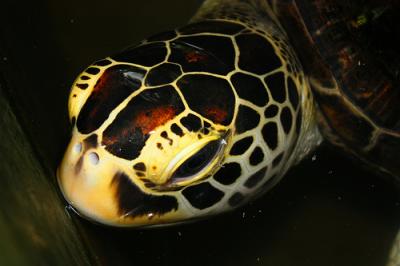
Turtles
In the sea and on
the beaches, there
are the turtles.
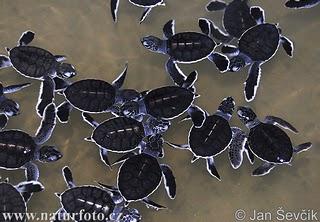
On a tropical night
illuminated by the
light of the full
moon, a small
section of a beach
begins to gently
quiver. Suddenly,
from amid the
shifting grains of
sand, emerge tiny
black forms, their
curved carapaces
glinting softly.
These creatures are
leatherback sea
turtle hatchlings,
which immediately
scuttle down the
beach towards the
sea, so beginning a
remarkable battle
for survival.
|
|
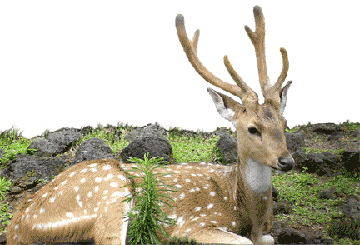
Deer
Sri
Lanka.s
forests
abound
with an
assortment
of other
furry,
scaled
and
feathered
creatures.
There
are five
species
of deer,
ranging
from the
diminutive mouse
deer -
just
30cm in
height
and
armed
with
elongated
canine
teeth -
to the sambhar,
a large
species
in which
the bull
grows
impressive
antlers.
The
latter
are best
seen in
the
high,
open
area
surrounding Horton
Plains,
where
they
gather
in the
evenings
to feed
on the
long
grasses.
|
|
| |
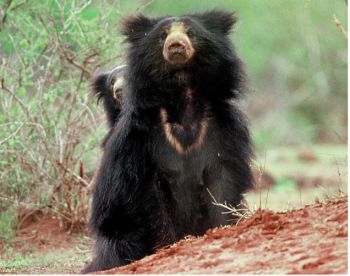
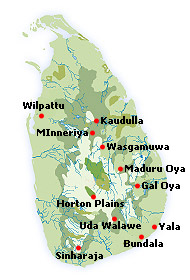
The final member of Sri Lanka.s .big three. is the sloth-bear, a shaggy, shambling denizen of the dry zone forests whose elongated snout and scimitar-like claws are ideal for extracting termites from their mounds. In May and June they take to the trees to feed on the sweet yellow fruits of the palu tree. Wasgamuwa National Park is one of the best places to have the pleasure of a sloth-bear encounter.
Parks and Gardens
Sri Lanka is one of the smallest, but biologically diverse countries in Asia. Indeed, the country is listed by Conservation International as one of the world’s 34 official “Biodiversity Hotspots”. In addition, The Sinharaja Forest Reserve, the country’s last viable area of primary tropical rainforest, is the seventh UNESCO World Heritage Site. Sri Lanka’s high proportion of endemic species is remarkable. Take land crabs: all 51 species are endemic.
Influenced by Buddhist respect for all living beings, Sri Lanka has a well-entrenched conservation ethic. Indeed, Udawattakelle Sanctuary in Kandy is probably the world’s oldest wilderness protected area. There are 12 National Parks and 52 Sanctuaries, which together account for 13% of Sri Lanka’s land area.
A national park safari offers the chance to see some of Sri Lanka’s 92 mammals (16 endemic) - elephant, leopard, sloth bear, sambhur, spotted deer, mouse- and barking-deer, porcupine, ant-eater, civet cat, giant squirrel, and monkeys such as the macaque, purple-faced leaf monkey and grey langur.
Yala National Park is believed to have the world’s highest concentration of leopards. Uda Walawe National Park is famous for its elephants, but Minneriya National Park boasts the awesome dry season “Gathering”, in which herds of elephants congregate to drink the region’s remaining water
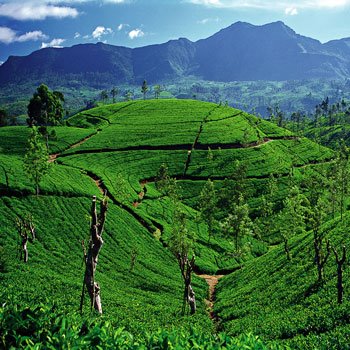
Hill country
Mist-shrouded mountains, rolling tea plantations, cascading waterfalls and quaint hilltop villages - these are some of the aspects of the enchanting hill country, which rises to over 2,500m in the island’s central heartland. A 125km distance by car or rail from Colombo, this region offers you the chance to escape to a world that scarcely seems possible in the tropics. With surreal landscapes, cool climes and a rich heritage, the hill country is a haven for nature lovers, hikers, adventure-seekers and those simply in search of peace and tranquility.
Whether you want to go rock climbing, fish for trout, play golf in stunning natural surroundings, climb a sacred mountain or trek through the rugged wilderness, the beguiling hill country has it all and will reinvigorate the body and refresh the soul. No wonder the hill country is a small miracle.
Royal City of Kandy
Nestled in lush green hills and built around a scenic lake, the Royal City of Kandy, at 500m above sea level, is the hub of any visit to the hill country. Kandy (Colombo 116km) a UNESCO World Heritage Site, was the last bastion of resistance to colonial rule. Even today, Kandyans pride themselves on their distinctive architecture, music, dance and art. The showpiece of the city is the Dalada Maligawa or Temple of the Tooth, which hosts the Buddha’s tooth relic, an item of veneration to all Buddhists. Each year, in July or August, the city holds the Esala Perahera, a spectacular procession and display of medieval pageantry - replete with caparisoned elephants, whirling fire-dancers and pulsating drummers - the main purpose of which is to parade the tooth relic. Strolling around the lake or exploring the numerous temples that dot the hills nearby is an ideal way to experience the atmosphere of this historic city.
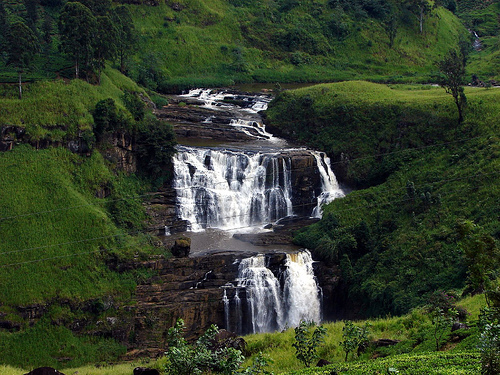
Waterfalls
Waterfalls are one of the most fascinating of natural phenomena. The mesmerizing sight of free-falling water, the thunderous roar as it hits the rocks below, and the curiousity of what lies behind the aqueous curtain, all contribute to this fascination.
In
comparison to its size, Sri Lanka has a surprising abundance of many things, including waterfalls about 100, but there may be some undiscovered. Many of these waterfalls are of impressive height, the tallest being Bambarakanda, which is 263m. Even if they aren't, they are usually distinctive for some reason or another.
A wide coral reef largely surrounds Sri Lanka’s coastline making it ideal for diving. An underwater journey into the Indian Ocean rewards you with glimpses of a totally different world, full of astounding colour and life. Home to a variety of tropical fish and coral reefs, the ocean waters also lay claim to some historic wrecks that offer exploration opportunities.
The more laid-back activity of snorkelling is a popular past-time in many southern coastal areas, particularly the Hikkaduwa Marine Sanctuary, and on the east coast around Pigeon Island off Nilaveli, near Trincomalee. Marine life to be seen includes big fish such as barracuda, whale shark, tuna as well as four species of turtle.
The gentle swell of the Indian Ocean waves offer great opportunities for surfing. There are first-class waves in Arugam Bay on the east coast, and along the south coast at Hikkaduwa and Mirissa. However, in other places the calm water of the Indian Ocean just laps onto the sandy shore, such as at Unawatuna, near Galle, and Nilaveli, making them safe for swimming and especially good for families with young children.
Wind-surfing can be enjoyed at many places along the coastline from Negombo to Tangalle. Bentota is the unofficial water-sports capital of the island because aside from its rolling surf and beautiful sandy beaches, it also has a river where beginners can gain experience before heading into the ocean. Trincomalee on the east coast offers a fantastic alternative for wind-surfers when the south-west monsoon brings strong winds and rough seas.
In Negombo and Hikkaduwa, the increasingly popular thrill-seeking sports of wake-boarding and kite-surfing are beginning to take off.
Finally, please remember to respect the Indian Ocean at all times. Always beware of the strong currents that often run parallel to the coast. Newcomers to the island should remember that it is rare to find a lifeguard at the beach in Sri Lanka or any flags indicating safe places for swimming. Less confident swimmers should ask a local for their advice or just test the waters carefully and make sure someone knows you have gone out for a swim or dive.
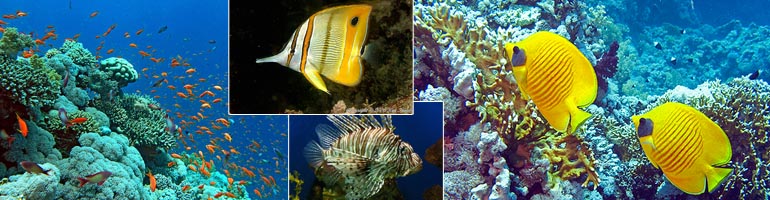
Some of the delights of a Sri Lankan beach.
|
|
|
|
|
|