|
Pelling trip
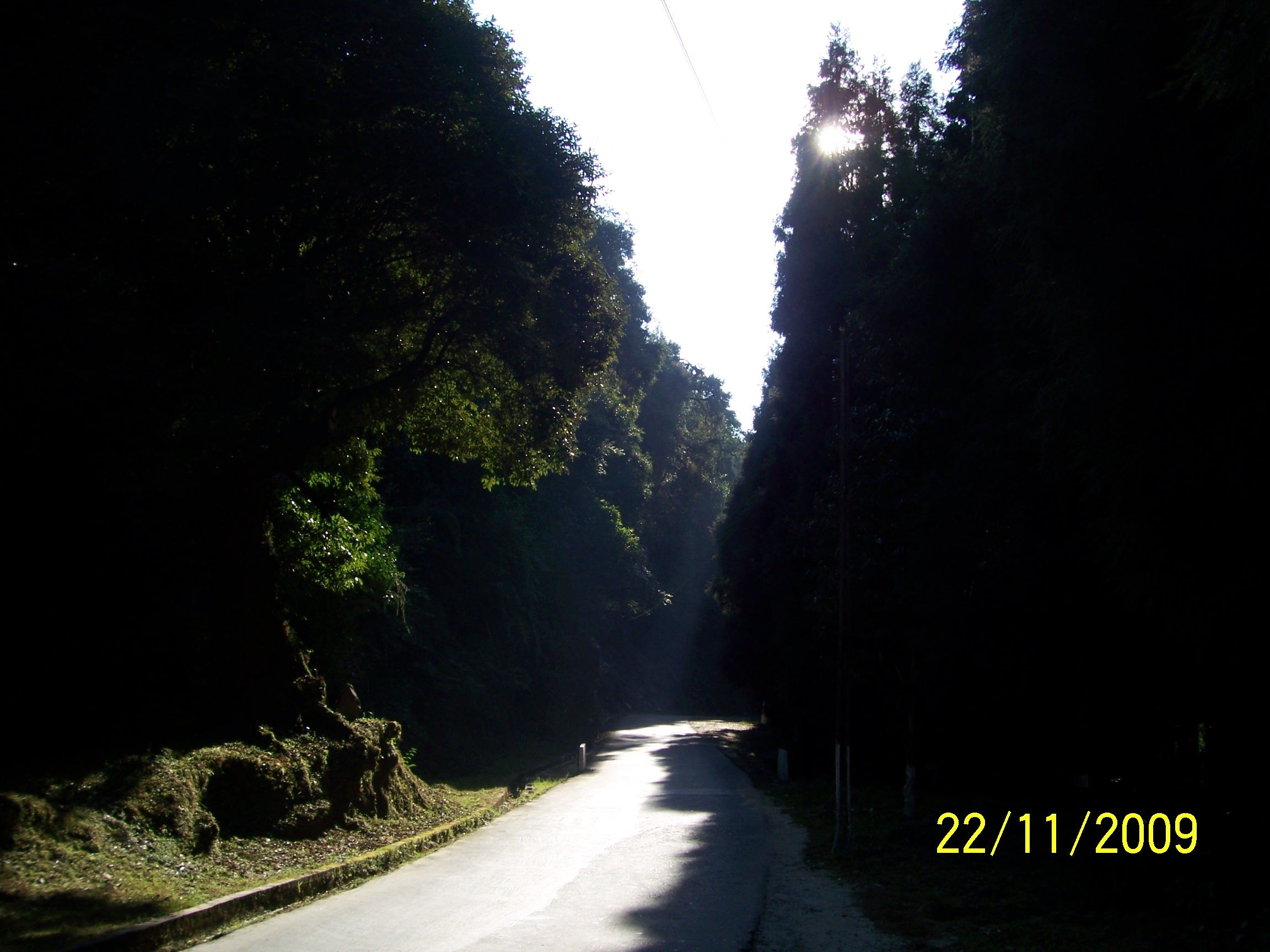 |
| Way to Pelling |
If you go down that road (or, rather, up to be more
precise) you will reach Pelling. Its name gives a fair idea about
the place: it is halfway between appealing and appalling. It is
surrounded by hills, and their icy peaks extend the warm welcome
you craved for when planning this trip to Sikkim. But the
polluting cars, and rubbish piling up everywhere mars the
joy. And the food...
But to be honest, our weekend trip was too short to give Pelling
a chance to prove herself. We stayed there a little more than a
day. We had arrived one Saturday afternoon, spent the Sunday in
Pelling and then left on Monday before noon. Just in case you are
like us, desperate to get away from the madding crowd of the
city, love the Himalayas but have too little time to spare, you
might be interested in knowing how we got there at all.
Darjeeling Mail was slightly before time when it deposited us at
the New Jalpaiguri (NJP) station at around 8 in the morning. With
a lot of tourists arriving from Kolkata this is the rush hour at
NJP, and the right moment to look for shared cabs to the hilly
destinations. Of course, the cab drivers all insist that you have
to reserve a cab to go anywhere, but a little patient search
always finds many shared vehicles at a much cheaper rate. We knew
all this, and yet made a mistake here. We spent half an hour for
breakfast. When we finally started looking for the shared
cabs/buses there were hardly any left. Still one driver offered
a shared car for Rs 180 (which he even reduced to Rs 170). But we
were sure that a cheaper alternative existed. And this is good
demonstration that over-confidence is a bad thing. Anyway
we hopped into an auto-rickshaw (not the tiny Kolkata-type, but a
spacious Siliguri version) and got down at Payel cinema after
shelling out Rs 20 per head. Then we got into a jeep to
Jorethang. This charged Rs 100 per head. It was about a 4 hour
drive from 10am to 2pm, crossing the Sikkim border around noon.
We were told that cars are available from Jorethang to
Pelling. But the cab men at Jorethang told us just the
opposite. They suggested that we first go to Geysing and from
there we can find cab to Pelling. Since we had no other
alternative, we complied. We were stowed at the back end of an
overcrowded cab. After a cramped one and half hour it was a huge
relief to be dumped at a Geysing. Controversy seemed to exist as
to the true name of the place. The official name appeared to be
Gyalsing, though that `l' was hardly discernible in the spoken
name.
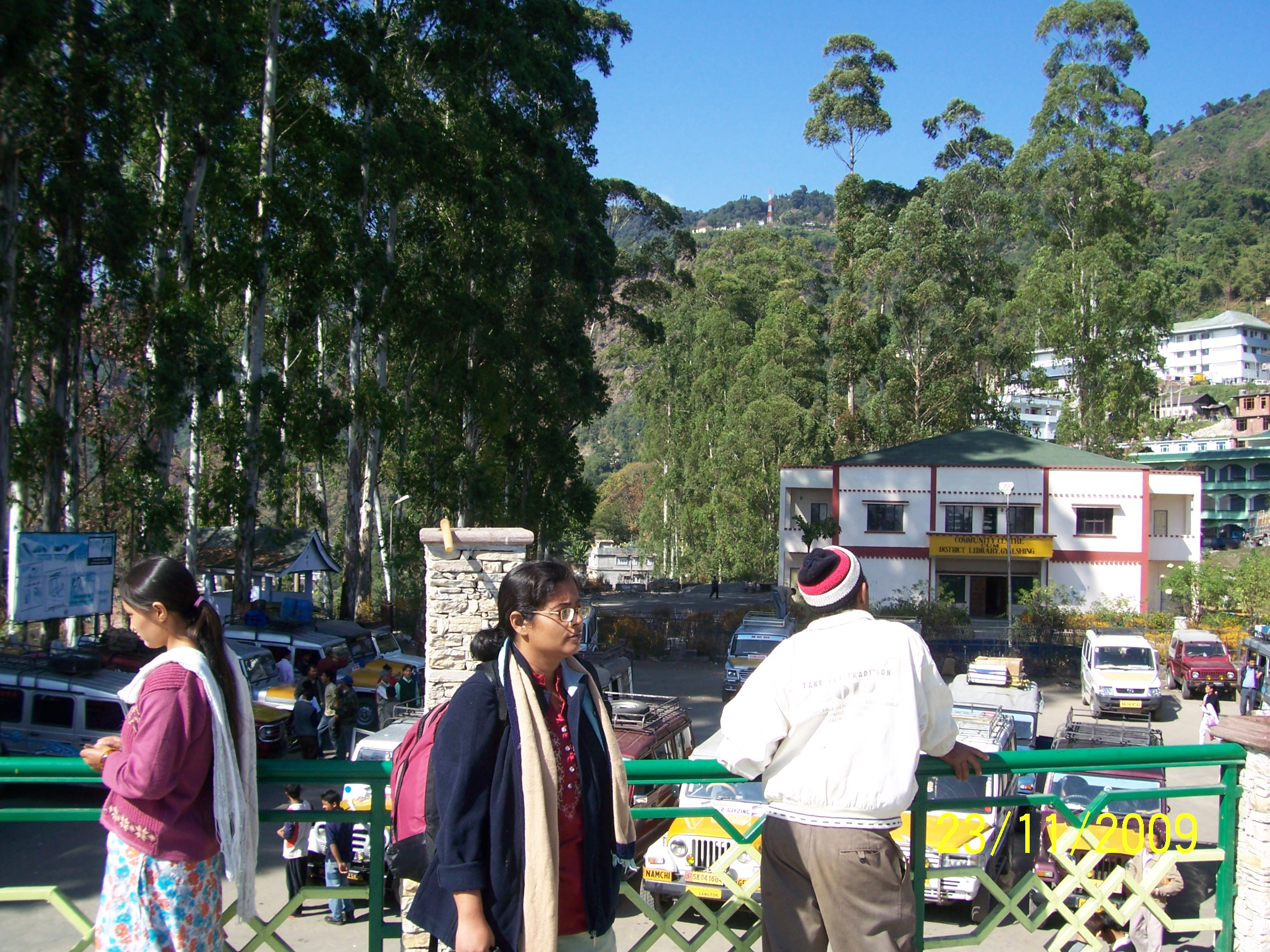 |
| Gyalsing cab station |
The lady in the centre wearing an expression like
Netaji Subhas Bose planning the future of India is one of us (or
may be I should say the other of us).
We did not have much time to see much of Gyalsing. But judging by
the brief glimpses it was a busy crowded hilly township and a
communication hub. The building with the yellow signboard is a
library, that we did not have a chance to slip into. The cab
station was full of cabs for all sorts
of places. There was a shaded place for the passengers to
sit. Lots of roadside shops had mushroomed to cater for the
gastronomic needs of the drivers as well as the passengers.
A cab was about to leave for Pelling. We quickly got inside, and
in return for Rs 20 per head found ourselves at upper Pelling
barely half an hour later.
|