|
First day at Bhalopahar
The road beside which the trekker was standing goes straight to
Jharkhand. It was along this road that our over-crowded vehicle
sped. There were not-too-green fields on either side of this remarkably
straight road. After half an hour or so, the trekker dumped us at one spot
on the roadside. A handwritten sign hanging from a large tree nearby
pointed to a metal gate in a whitewashed wall. Since it said "Bhalopahar",
we ventured to go in.
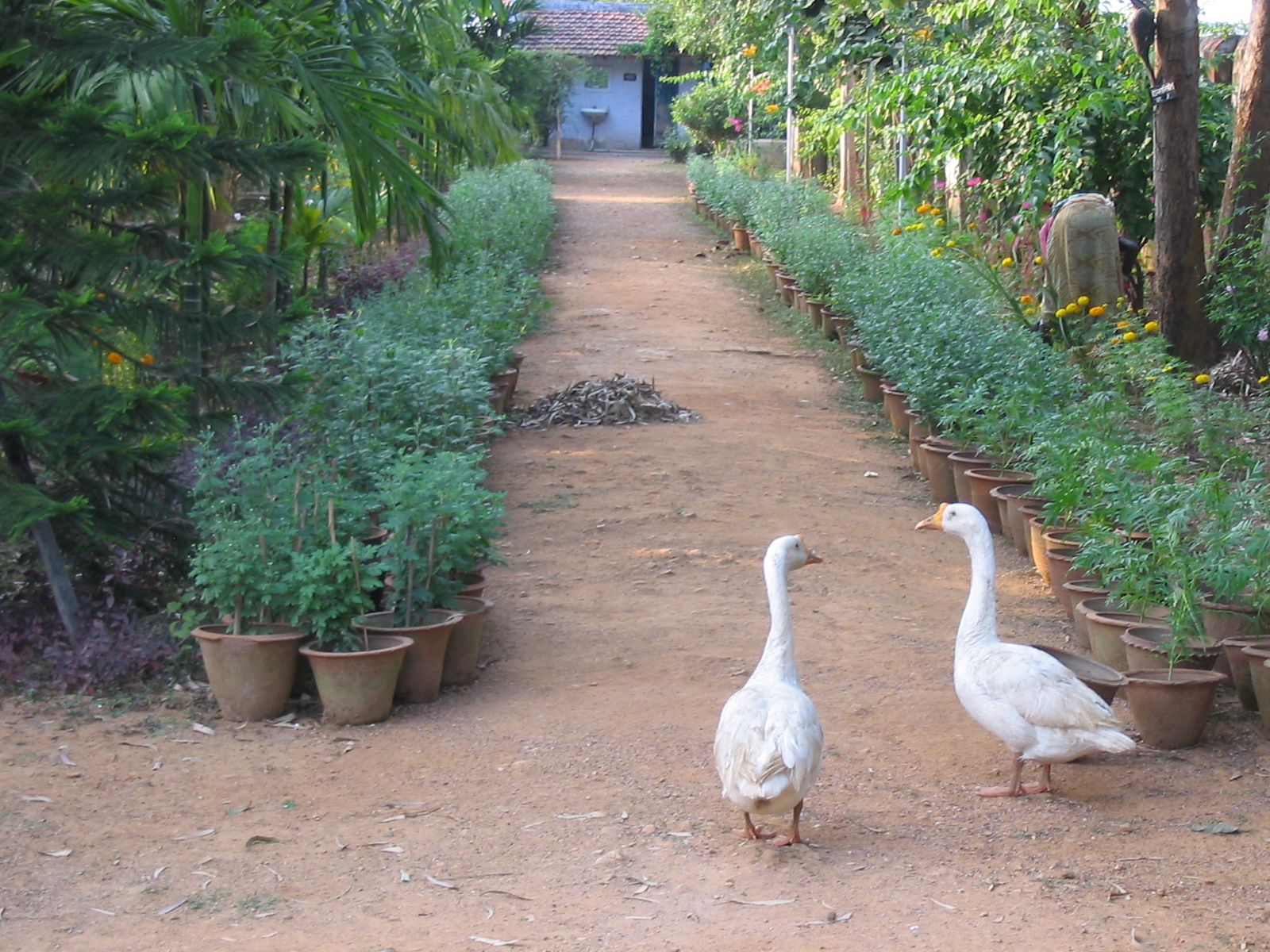
There was a large garden inside, chokeful of trees. A long passage way led
deep into the garden. This passage was guarded by, no, not dogs, but by a
brace of no less vigilant swans.
 |
|
The watchful "dogs" at the entrance to Bhalopahar.
|
These winged sentinels announced our arrival through aggresive cackles and
gestures. At the center of the garden there is a romantic thatch-roofed
shelter where the inmates were finishing lunch. Among them was sitting
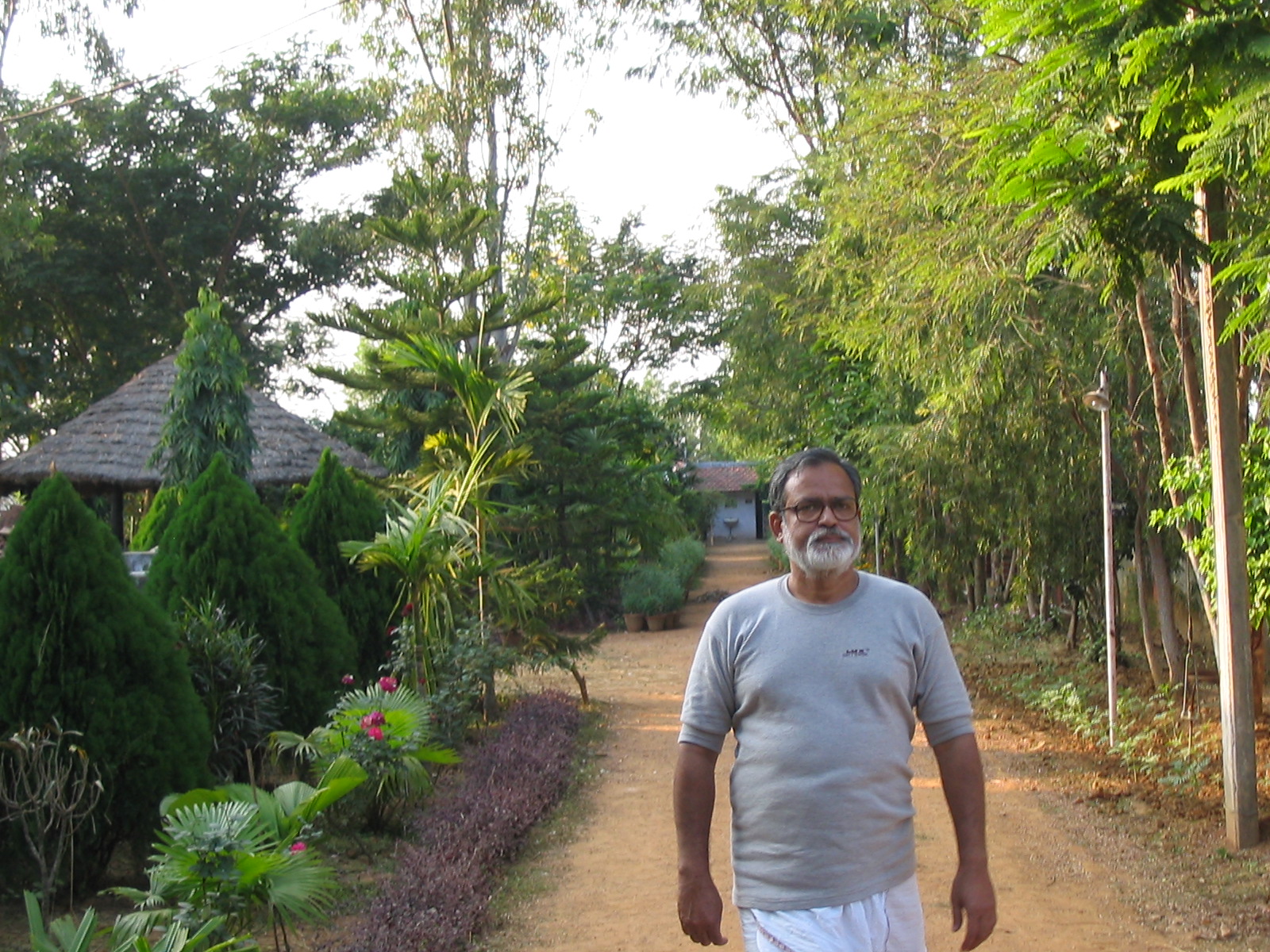
a solidly built elderly person, who turned out to be the head of this
organisation: Kamal Chakraborty, a poet. Barin babu, president of the
organisation and another poet, was present too. Sanjit told them that he
had read their little magazines. This remark made
Kamal Babu so very happy that he called Sanjit a sweet boy.
 |
|
Kamal Chakraborty of Bhalopahar
|
We were shown to our room, a medium-sized double bed one with attached
bath. It cost Rs 300 per day. The garden started right before the little
verandah in front of the room. It was certainly relaxing to lounge
dreamily in one of the chairs in that verandah and gaze idly at the
greenery that seemed to separate one from the rest of the civilised
world.
SOme attempt has been made to make this place self-sufficient. Bhalopahar
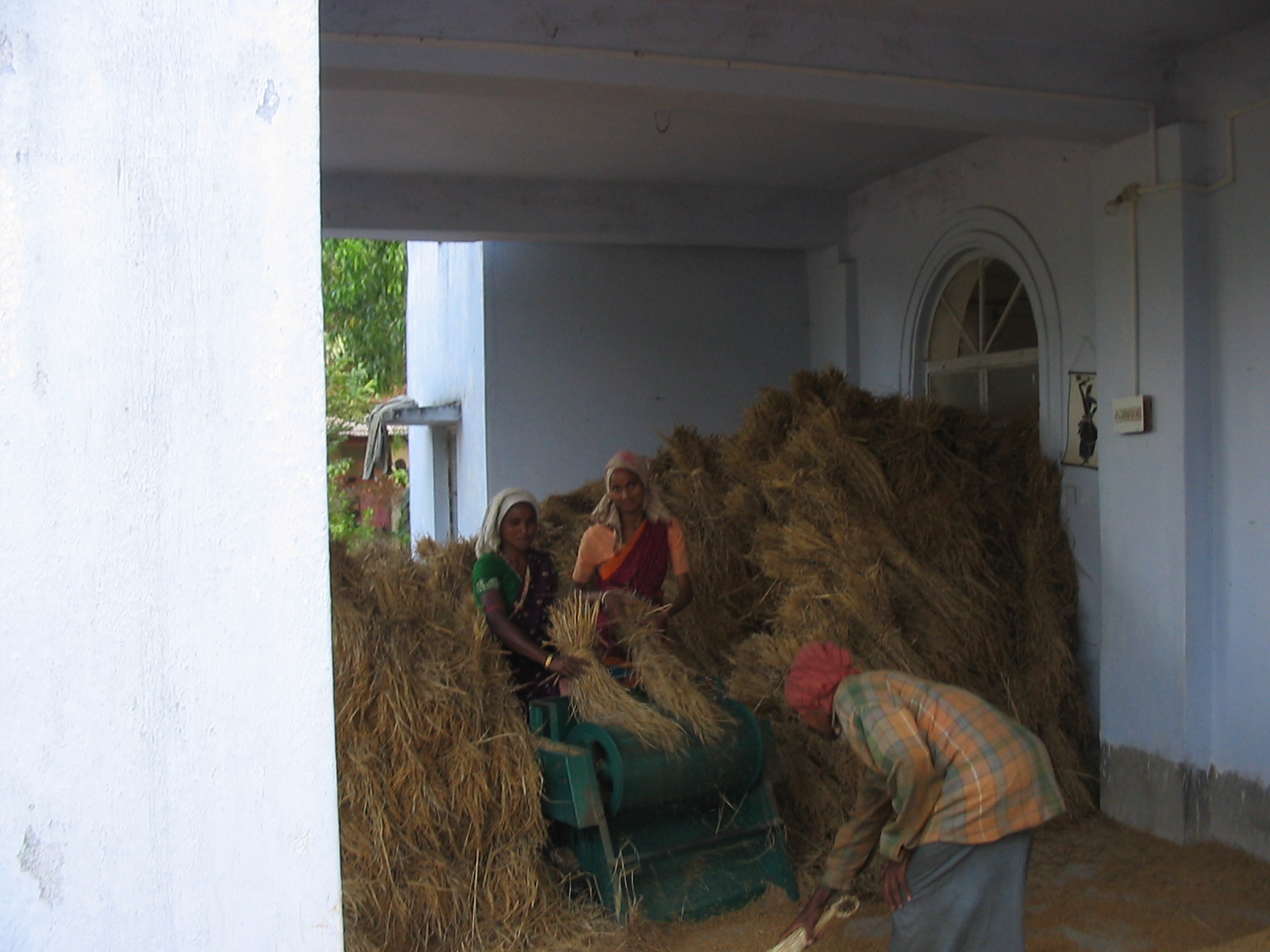
has some farmland in the locality. We found some local women threshing the
newly cropped paddy using a threshing machine.
 |
|
Paddy threshing at Bhalopahar
|
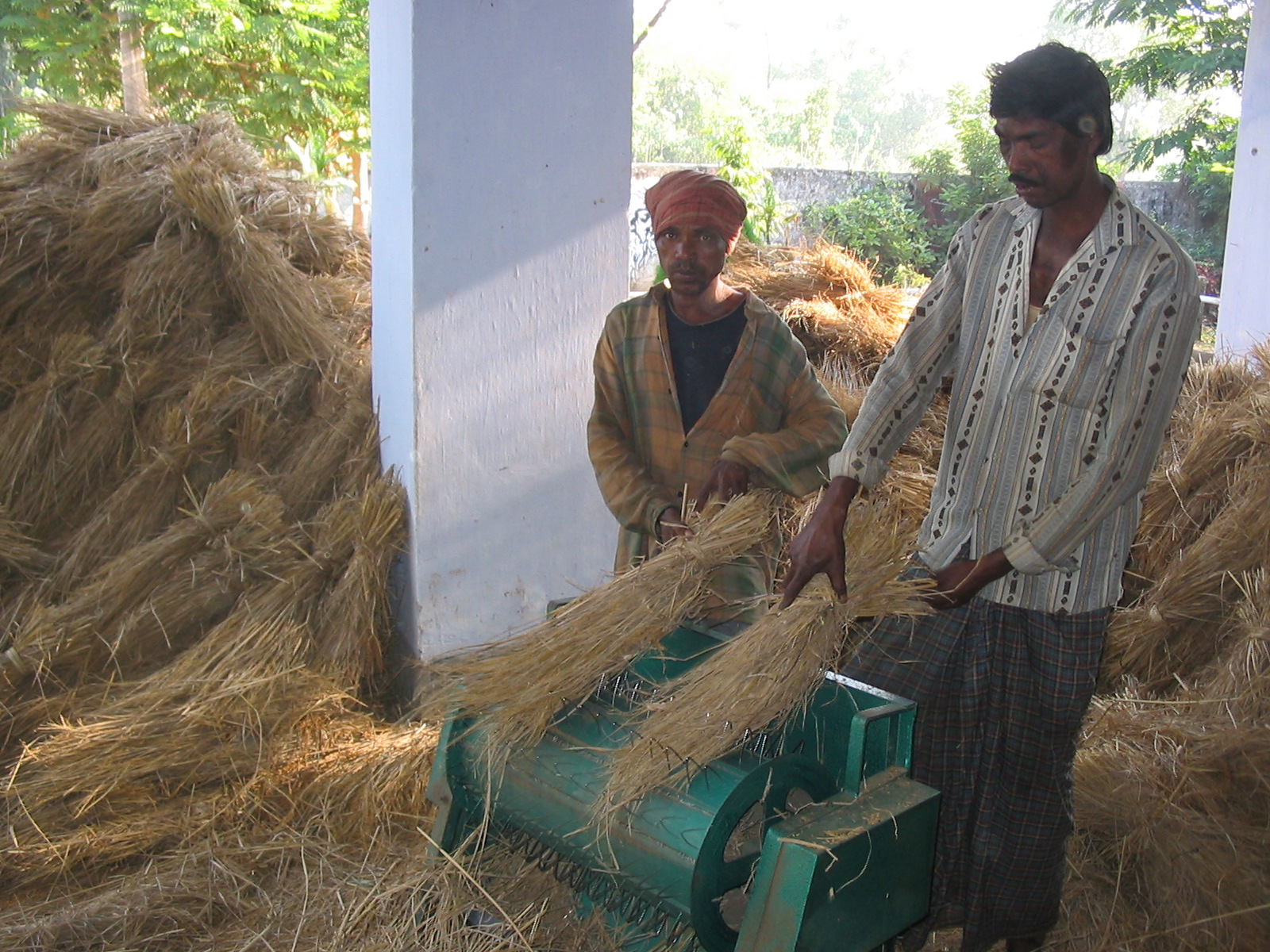
The green threshing machine consists of a wooden cylinder with metal
bristles jutting out in all directions. The cylinder may be turned by
operating a pedal, much like a sewing machine. The only trouble is that
unless you operate the pedal at the certain rhythm, the cylinder turns in
the wrong direction! When the harvested paddy plants are held over the
cylinder with the tips touching the bristles, the paddies are threshed out
and sent flying in all possible directions. A person then has to sweep the
floor with a broom to collect the paddies. This little device is very
popular, and costs between Rs 2000 and Rs 2800.
 |
|
A closer look at the threshing machine
|
Just beside the threshing machine is an archway leading into what
Kamal-Babu calls the "Library". The dusty, high roofed hall does have a
pile of books at one end. If we call this a library, then its only members
so far seem to be the moths and termites. Indeed they have made sumptuous
repast out of a collection of cheap thrillers and digested many issues
of the Reader's Digest collecion dating back to as early as 1963. A couple
of Complete works of Shakespeare, a few astronomy books as well as a few
novels by Dickens have so far succesfully resisted the onslaught of the
voracious insects. The books are mostly piled up in dust-covered
boxes.
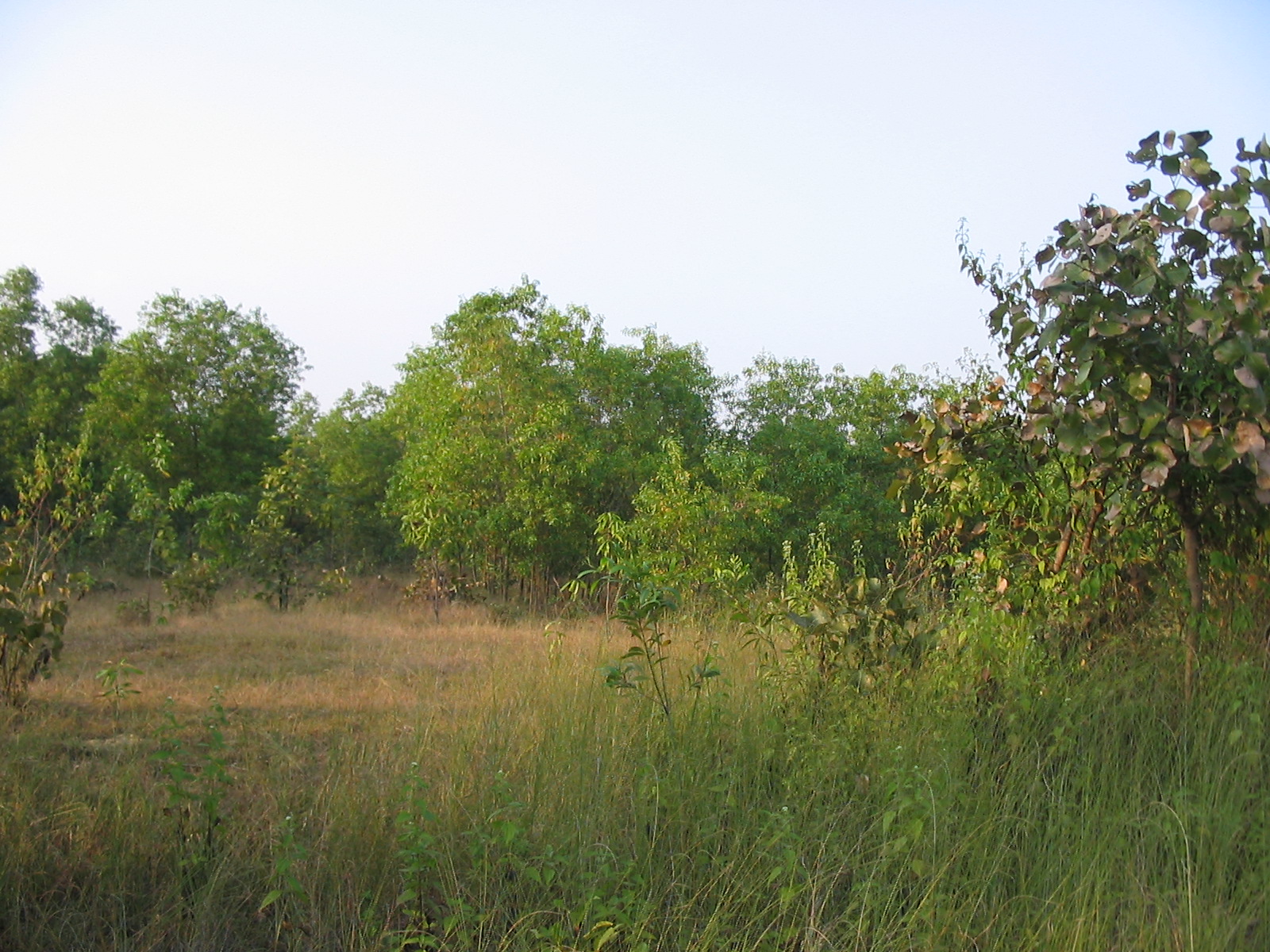
In the evening Kamal-babu took us to his man-made forest. As I have
already mentioned, it sprawls over an impressive 150 bighas. "The entire
place was barren", he proudly said waving his hand towards what now was a
mass of greenery, "we have planted all these trees." There was not much
plan or order in the way the trees were planted. This added more to the
charm. It was indeed hard to believe that these trees were not natural.
At
the Duarshini eco-tourism centre, the government has also planted a huge
number of trees. Most of the government trees, however, are of the
Sonajhuri type, a variety that grows easily in that arid area, but
notoriously sucks up all the nutrients in the soil, leaving the area more
barren than before. The bhalopahar forest, on the other hand, contains
many fruit trees and flower trees. There are whole clusters of mango
trees (which do not thrive well in the local climate) another cluster is
devoted to guava.
 |
|
An open space in the Bhalopahar forest
|
In fact, with trees everywhere, the forest does not provide the ideal
place for photography. But it is ideal for little nature walk.
|